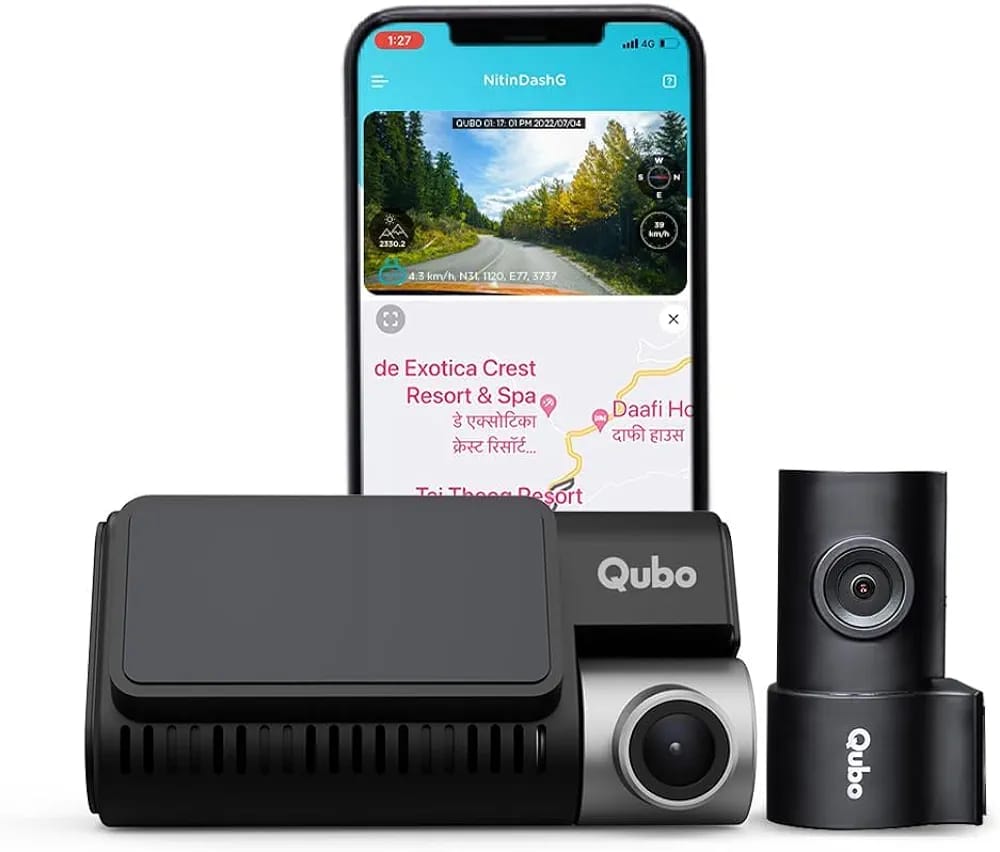
When describing car dash cams, it's important to focus on their recording quality, features, design, and any advanced capabilities that enhance safety and convenience. Below are detailed descriptions for different types of car dash cams: 1. Single-Lens Dash Cam Single-lens dash cams are the most common type, designed to record the road ahead. Recording Quality: Typically records in high definition, with resolutions ranging from 1080p Full HD to 4K Ultra HD. The high resolution ensures clear and detailed video footage, capturing important details like license plates, road signs, and pedestrians. Field of View: Offers a wide-angle lens, usually between 120° to 170°, to cover a broad area of the road ahead, reducing blind spots and capturing the full scene in front of the vehicle. Design: Compact and discreet design that mounts easily on the windshield. Some models are so small they can be hidden behind the rearview mirror, minimizing distraction. Special Features: Includes loop recording, automatically overwriting the oldest footage when the memory card is full. Some models also feature G-sensor technology, which detects collisions and locks the current footage to prevent it from being overwritten. Storage: Uses microSD cards for storage, with support for cards ranging from 32GB to 256GB, depending on the model. Power Supply: Powered via the car’s 12V socket or hardwired into the vehicle’s fuse box for a cleaner installation. 2. Dual-Lens (Front and Rear) Dash Cam Dual-lens dash cams are designed to record both the road ahead and the area behind the vehicle, providing comprehensive coverage. Recording Quality: Typically records in Full HD 1080p or higher for the front camera and 720p to 1080p for the rear camera. Some advanced models may offer 4K resolution for the front lens and 1080p for the rear. Field of View: Wide-angle lenses on both front and rear cameras, covering the entire road and rear traffic. Front cameras generally offer up to 170° coverage, while rear cameras cover around 120° to 140°. Design: Consists of a primary unit for the front camera, with a secondary camera connected via cable for the rear. The rear camera is typically mounted on the rear windshield or bumper. Special Features: Includes features like parking mode, which records footage if motion is detected while the vehicle is parked. Other features include night vision, G-sensor for collision detection, and loop recording. Some models may also include GPS tracking for recording speed and location data. Storage: Supports microSD cards, with some models offering cloud storage options for remote access and backup. Power Supply: Powered through the vehicle’s 12V socket, with some models offering hardwiring kits or external battery packs for uninterrupted power. 3. 360-Degree Dash Cam 360-degree dash cams are designed to capture panoramic video footage, covering all angles around the vehicle. Recording Quality: Records in high definition, often in 1440p Quad HD or higher, with the ability to capture footage from all angles simultaneously. The 360° lens ensures that no blind spots are left uncovered. Field of View: Provides a full 360-degree field of view, capturing everything happening around the car. This is ideal for capturing incidents from all sides, including side collisions or attempts to tamper with the vehicle. Design: Typically features a single camera unit with a fisheye lens, mounted on the windshield or dashboard. Some models may have multiple lenses strategically placed around the vehicle to achieve full coverage. Special Features: Includes advanced features like G-sensor, parking mode, and night vision. Some models offer split-screen viewing, allowing you to view multiple angles simultaneously. GPS tracking and speed monitoring are often included for comprehensive data recording. Storage: Supports high-capacity microSD cards, often up to 256GB or more, to store extensive footage. Some models may offer cloud storage or Wi-Fi connectivity for remote access. Power Supply: Typically powered through the car’s 12V socket, with hardwiring options available for continuous recording. 4. Wi-Fi/Smartphone-Connected Dash Cam Wi-Fi-connected dash cams offer the convenience of accessing and managing footage directly from your smartphone. Recording Quality: Offers high-definition recording, typically 1080p or 1440p, with some models providing 4K resolution. The video quality is sharp and detailed, suitable for reviewing footage on a smartphone. Field of View: Wide-angle lens providing broad road coverage, usually between 140° to 170°. Design: Compact design that can be mounted discreetly on the windshield. The camera often has minimal buttons and relies on smartphone connectivity for controls and settings. Special Features: Includes built-in Wi-Fi, allowing you to connect the dash cam to your smartphone via a dedicated app. This enables real-time viewing, downloading, and sharing of footage.
Kothrud
+917270019019
 Chat with us
 Chat with us